Workflow automation
Digital skills are as important as maths today. Schools across the country are looking for ways to expose students to working with data, databases and modern information systems so that they really understand it – not just theoretically, but more importantly practically. One way to achieve this goal is Tabidoo, which allows students to build their own database or simple application in minutes. What does such learning look like in practice? We asked Mr. Roubal from the Pacov Gymnasium, where Tabidoo has become an integral part of computer science classes.
Author Tabidoo
5 minutes to read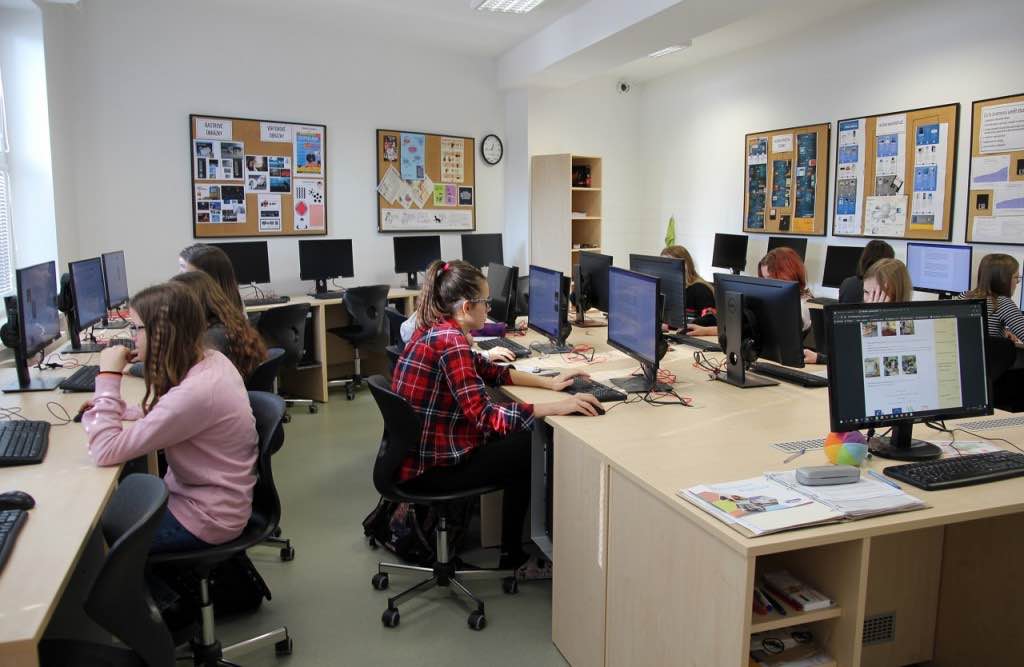
Pacov Gymnasium is a six-year high school founded in 1992. The school focuses on modern language and computer science education, offers well-equipped classrooms, promotes work with technology and provides its students with a wide range of development opportunities from project days to professional excursions.
Thanks to its long-standing orientation towards technical education, teachers here have the space to work with new methods and incorporate modern tools directly into their teaching. And today one such tool is the Czech low-code/no-code platform Tabidoo.
I was looking for a database system that was clear and illustrative. I wanted to show students how databases work in practice. That’s how I came across Tabidoo.
I needed the students to be able to create their own database, understand the links and see how the different parts fit together. Theory alone is not enough. Tabidoo allowed me to show them with a real example.
Yes. That is why I continue to use it and recommend it to colleagues. There are other systems, but they are not as simple or as clear.
Mainly the understanding that databases are not something abstract. They will encounter them in every company. It’s good that in the new RVP (Framework Educational Program), working with databases is a mandatory part of the curriculum. This is not the only thing that allowed me to incorporate Tabidoo into my lessons. It fulfils the assignment perfectly. Students see the result immediately and it makes sense to them. After all, you know what they say – a student is satisfied when, after making an effort, he achieves success.
Teaching is changing in waves. In recent years, it has clearly been shifting, but the compulsory hourly allocation is still only one hour per week, which is insufficient for deeper work. We have two to three hours, and that gives students the space to really understand the principles and try everything out.
However, the final scope is actually decided by the school management – every increase in the number of hours of computer science teaching means taking time away from another subject.
Yes. In most schools, computer science is in a smaller hourly allocation or divided into digital competences of other subjects. At our school, we teach it fully as a separate subject, which is more effective – we have the classroom and equipment for it.
From my point of view, it is one of the most important subjects. Children are living in a digital world and teaching should reflect that. It is a pity that the Ministry does not always understand this, but schools have the opportunity to strengthen IT themselves.
Because they quickly see a workable result. They have to do something, think about the structure, but then they see how it works. That sense of achievement is essential for students, and Tabidoo makes it possible.
When I needed to explain to students why databases are important and how they work. At Tabidoo they could try it out right away: create tables, link them, populate them with data. It’s much more visual than a theoretical explanation.
Linking tables through sessions and keys. It’s an abstract topic, but in Tabidoo you can immediately see how the parts work together and it doesn’t take students long to understand the connections.
I’ve found a lot of support at trainings and conferences. Enthusiastic computer scientists appreciate that Tabidoo is easier to use than traditional database tools. Of course, there is a part of teachers who don’t like teaching computer science – there it is more complicated. But in general the response is positive.
The story of the Pacov Gymnasium shows that when schools have the desire to modernize their teaching and are looking for a tool that quickly shows students the principles of databases and working with data, Tabidoo has a vital place in the curriculum. Simple controls, visual logic and the ability to create your own applications make Tabidoo a practical tool that students enjoy and prepares them for the world they are heading into.
The question now is, what school will Tabidoo head to next?
Workflow automation

Reports

Multilingual
Quick setup, zero risk, full control.
No trial limits
No user fees
No credit card required
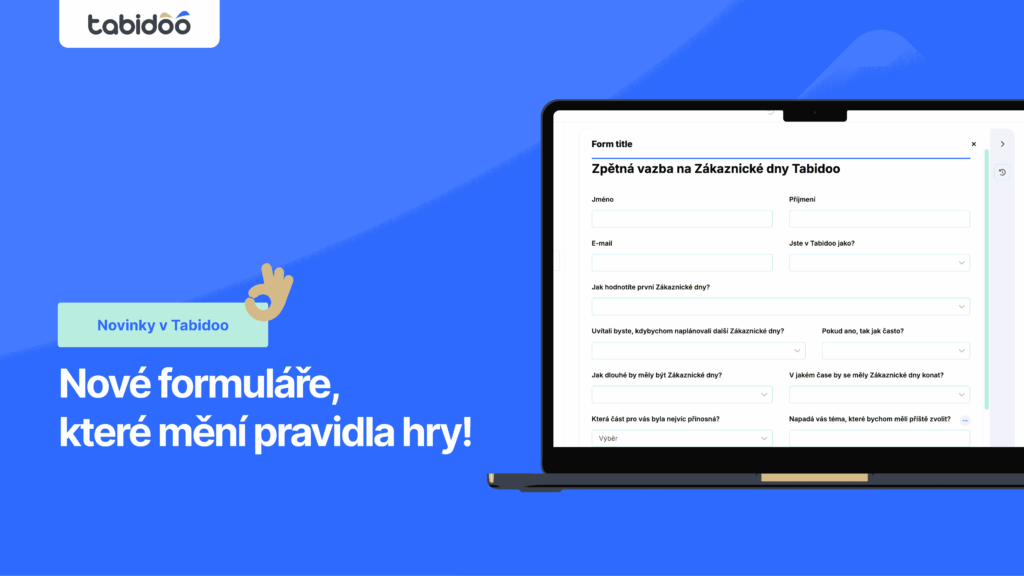
Discover the new forms in Tabidoo: faster data entry, smart authentication and a modern UI to make your business work even faster and error-free.
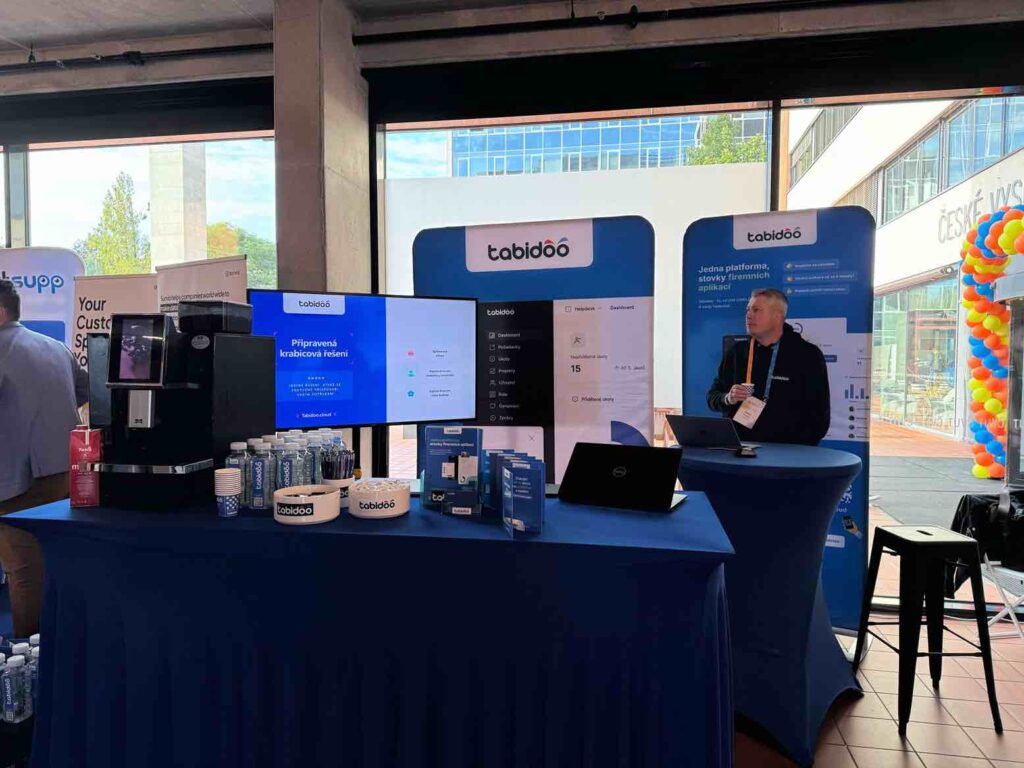
Tabidoo headed to Shopcamp this year! Conference, which is one of the best in Czech e-commerce. Read more about the day full of talks, know-how sharing and inspiration.

When we decided to support TR Tabidoo, it wasn't just a question of sports partnership. It was a decision to stand up for a team that represents the same values as us.

Companies are about relationships. And not just internal ones, but also about partnerships. Another year of Partner Days Tabidoo is behind us.